

Managing Digital Infrastructures in the Age of AI
As digital technologies continue to blur traditional industry boundaries, smart and connected infrastructures are reshaping how organizations create, deliver, and capture value. Leaders today must move beyond incremental digitalisation and adopt digital infrastructure strategies grounded in ecosystem thinking. By leveraging technologies such as IoT, 5G and 6G networks, edge computing, digital platforms, and artificial intelligence, organizations can foster greater innovation, collaboration, and resilience across their value networks. In an era where physical products increasingly become intelligent, data-driven systems, competitive advantage depends less on the product itself and more on the strength of the surrounding digital ecosystem and an organization’s ability to coordinate value among connected stakeholders.
About the programme
As digital technologies continue to blur traditional industry boundaries, smart and connected infrastructures are reshaping how organizations create, deliver, and capture value. Leaders today must move beyond incremental digitalisation and adopt digital infrastructure strategies grounded in ecosystem thinking. By leveraging technologies such as IoT, 5G and 6G networks, edge computing, digital platforms, and artificial intelligence, organizations can foster greater innovation, collaboration, and resilience across their value networks. In an era where physical products increasingly become intelligent, data-driven systems, competitive advantage depends less on the product itself and more on the strength of the surrounding digital ecosystem and an organization’s ability to coordinate value among connected stakeholders. This program examines the development of these interconnected digital ecosystems and the technology infrastructures that are dissolving traditional distinctions between products and services. It integrates clear conceptual foundations with practical insights to help participants understand how to create and orchestrate value through these infrastructures. The sessions explore how connected technologies support new forms of value creation and coordination, how ecosystem strategies differ from conventional industry approaches, and how organizations can design and scale platform based business models. Participants will also consider how governance, data sharing, and interoperability influence strategic control, and how these advancements are reshaping operations, customer engagement, and organizational agility.
Who should attend
This program is designed for leaders, middle- and senior-level managers, and other decision-makers from business, government, and policy domains who wish to understand how connected technologies and digital ecosystems are transforming industries and public services. It suits professionals involved in digital strategy, critical infrastructure management, as well as digital transformation initiatives. No technical background is required, only a strategic interest in how IoT, Cloud, AI, 5G, and platforms can reshape value creation across diverse sectors.
What you will learn
- To equip managers with a practical understanding of digital ecosystems and connected technologies, including IoT, 5G and 6G, edge computing, platforms, and AI, to drive business impact. The program enables participants to interpret these technologies strategically, design connected ecosystem solutions, evaluate industry use cases, and address technical, regulatory, and ethical challenges in building scalable, trusted, and competitive connected businesses.
Curriculum
Ecosystem Thinking and Strategy
Examine how digital ecosystems reshape competition, collaboration, and value creation across industries.
Connected Technologies
Understand how IoT, 5G, edge computing, and platforms transform products into intelligent, data-driven services, with a focus on the integrative role of AI.
Convergence and Governance
Explore how AI, IT/OT integration, and Digital Twins enable predictive coordination, and how data access, interoperability, and monetization influence value capture in multi- stakeholder ecosystems.
Programme directors & faculty
Prof. Ashutosh Jha
Programme Director, Information Technology & Systems
Ashutosh Jha is a faculty at IIM Lucknow in the IT and Systems Area. Prior to joining IIM Lucknow, he was a faculty at SPJIMR, Mumbai. He completed his Ph.D. in Management Information Systems (MIS) from the Indian Institute of Management Calcutta, and his B.E. (Hons.) in Electrical and Electronics from BITS-Pilani, Goa Campus. He also has several years of practitioner experience in leading global technology firms. His research interests include Diffusion and Adoption of Mobile Information Systems, Techno-economics of Next-Generation Mobile Networks (4G/5G), E-Governance, and Development Informatics. His research publications have appeared in reputed outlets, including Information and Management, Information Systems Frontiers, Technological Forecasting and Social Change, IEEE Access, and IIMB Management Review, to name a few. He has also presented his work at the relevant International Conferences, including the International Conference on Information Systems (ICIS), European Conference on Information Systems (ECIS), Hawaii International Conference on System Sciences (HICSS), Mediterranean Conference on Information Systems (MCIS) and International System Dynamics Conference (ISDC), to name a few.
The IIM Lucknow classroom
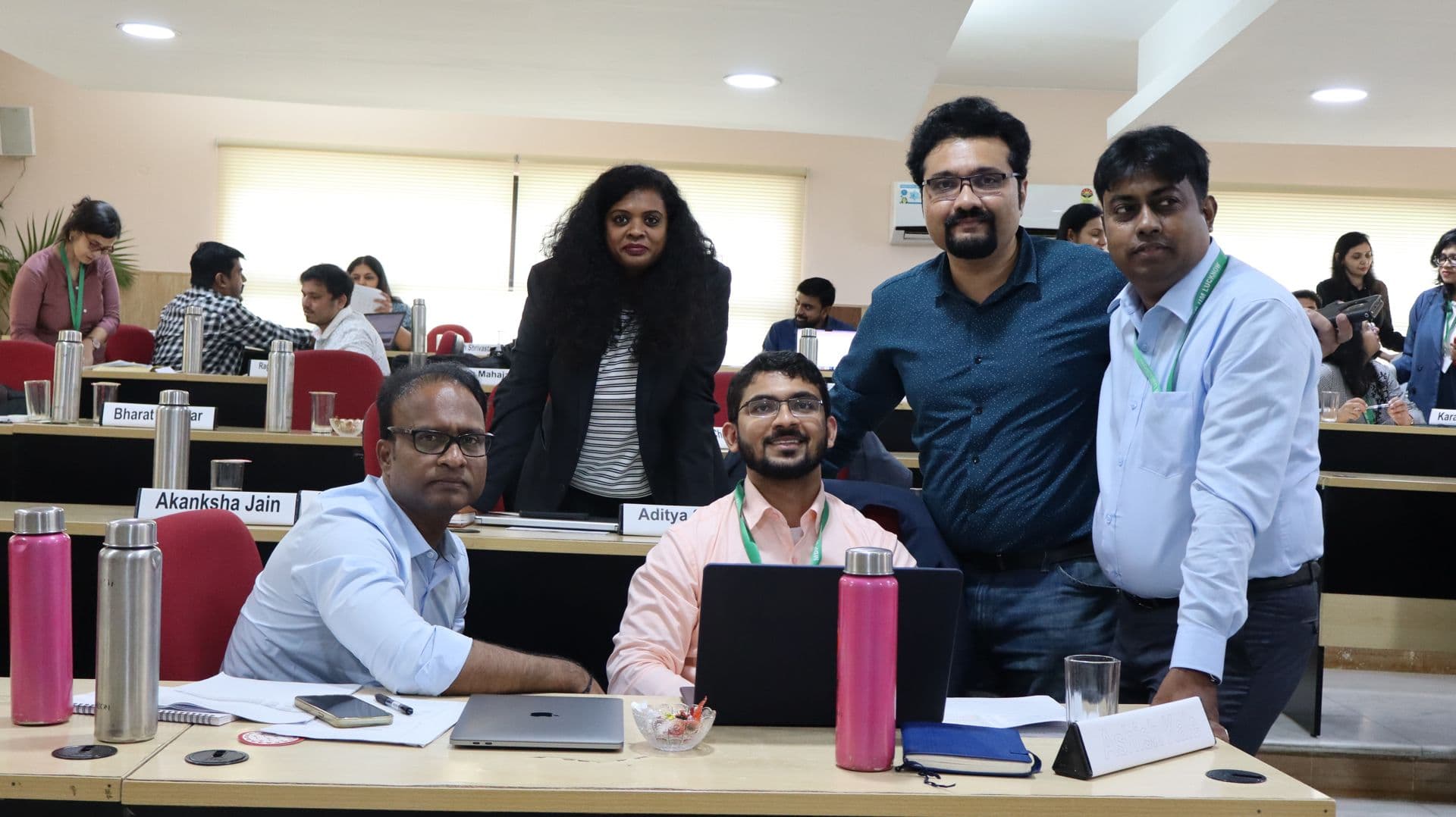
Sessions are anchored in the case method and taught by IIM Lucknow faculty, with business simulations, group work and peer learning drawing on the experience in the room. Participants who complete the programme receive an IIM Lucknow certificate, and attendance counts towards Executive Alumni status.
How to apply
Through the Institute
Register directly on the IIM Lucknow MDP portal. For questions before you register, use Enquire above or call the programme office.
Corporate Nominations
Sending colleagues from your organisation? Nominations of five or more participants qualify for group benefits.
Nominate ParticipantsFrequently asked questions
- What is the fee for Managing Digital Infrastructures in the Age of AI?
- ₹59,000 + GST (non-residential) or ₹66,500 + GST (residential). Fees are exclusive of GST unless stated otherwise.
- When does Managing Digital Infrastructures in the Age of AI start and how long is it?
- 25–27 Nov 2026; the programme runs for 3 days.
- Where is Managing Digital Infrastructures in the Age of AI held?
- On campus at IIM Lucknow, Lucknow.
- Who should attend Managing Digital Infrastructures in the Age of AI?
- This program is designed for leaders, middle- and senior-level managers, and other decision-makers from business, government, and policy domains who wish to understand how connected technologies and digital ecosystems are transforming industries and public services. It suits professionals involved in digital strategy, critical infrastructure management, as well as digital transformation initiatives. No technical background is required, only a strategic interest in how IoT, Cloud, AI, 5G, and platforms can reshape value creation across diverse sectors.
- Do participants receive a certificate?
- Participants who complete the programme receive an IIM Lucknow certificate, and attendance counts towards Executive Alumni status.
- How do I apply or nominate participants?
- Register directly on the IIM Lucknow MDP portal. For questions before you register, use Enquire above or call the programme office.
Related programmes in Information Technology
 Admissions OpenInformation Technology
Managing Digital Transformation: Thriving in the Artificial Intelligence Era
This program provides an opportunity for the participants to understand new-age digital technologies and its impact on processes, organizations and society. In the digital era, leaders are expected to navigate through change, overcome disruption, promote innovation and create future proof business models. This program introduces AI and other disruptive technologies along with elements of strategy, leadership and innovation in the context of digital transformation.
- Duration
- 5 days
- Dates
- 2–6 Dec 2026
- Fee
- ₹84,000 + GST
- Campus / Mode
- Lucknow
- Register by
- 1 Dec 2026
View programme
 Admissions OpenInformation Technology
AI For Business
Artificial Intelligence (AI) disrupted many businesses and job markets in the last few years. This course aims to familiarize and equip future managers with basic and contemporary AI. Apart from this the course covers the aspects of implementing the AI through Agile methodology and building AI powered organization. We focus on management aspects for reshaping business with AI along with Responsible AI concepts.
- Duration
- 5 days
- Dates
- 7–11 Dec 2026
- Fee
- ₹84,000 + GST
- Campus / Mode
- Lucknow
- Register by
- 6 Dec 2026
View programme
 Admissions OpenInformation Technology
Data Science and Big Data Analytics
In today’s digital economy, organizations compete not just on products or services, but on how effectively they leverage data. The Data Science and Big Data Analytics course equips business participants with the analytical mindset and technological understanding needed to make informed, data-driven decisions. Data Science integrates statistical reasoning, machine learning, and data visualization to uncover patterns, predict future trends, and support strategic planning. Big Data Analytics complements this by focusing on large-scale, high-velocity data generated from business operations, customers, markets, and digital platforms. It introduces students to modern tools and technologies—such as cloud analytics, Hadoop, Spark, and real-time dashboards—that enable scalable and impactful insights. Designed for future managers and business leaders, the course emphasizes practical applications such as customer analytics, financial forecasting, operational optimization, social media intelligence, and risk management. Through hands-on exercises, case studies, and industry examples, students learn how to translate data into meaningful business value, drive innovation, and support evidence-based decision-making across all functional areas
- Duration
- 5 days
- Dates
- 9–13 Feb 2027
- Fee
- ₹59,000 + GST
- Campus / Mode
- Lucknow
- Register by
- 8 Feb 2027
View programme